

Trump Administration Suspends Microsoft, Adobe, and Six Other Companies From PERM Green Card Program
By C. Matthew Schulz
The Trump Administration announced on October 8, 2026, that the U.S. Department of Labor (DOL) will suspend eight major technology and consulting companies from the PERM labor certification program used to sponsor foreign employees for U.S. permanent residence. The announcement affects Microsoft, Adobe, and six major IT services companies and certain of their employees, raising serious questions about the government's legal authority and the consequences for employers and employees pursuing employment-based green cards.
DOL administers the Permanent Labor Certification Program (PERM), which most U.S. employers must use before sponsoring foreign workers for EB-2 and EB-3 immigrant visas. At an October 8 White House press conference, Acting Secretary of Labor Keith Sonderling announced that DOL would stop accepting new PERM applications and suspend processing of pending applications involving the designated companies. Although the announcement received extensive publicity, DOL has not published an official press release or administrative suspension order explaining the action.
The announcement received widespread coverage, including reports by Reuters, Associated Press, Newsweek, and the Society for Human Resource Management (SHRM). Vice President JD Vance accused major technology companies of abusing immigration programs to replace American workers, while Microsoft disputed the Administration's characterization of its hiring practices. Reuters
What Did the Trump Administration Announce?
The Administration identified eight companies that it intends to exclude from new PERM filings and whose pending PERM applications it will stop processing. These companies are Microsoft, Adobe, Cognizant, Infosys, Tata Consultancy Services (TCS), Wipro, HCL Technologies, and Capgemini.
The action targets some of the largest users of employment-based immigration programs in the United States. These companies operate in software development, cloud computing, consulting, engineering, and IT outsourcing.
According to Reuters and SHRM, Sonderling announced that DOL would neither accept new applications nor process pending applications involving these companies. SHRM characterized the suspensions as indefinite, with no announced expiration date.
Vance emphasized Microsoft's employment of H-1B workers while the company was laying off other employees. He asserted that Microsoft had laid off approximately 6,000 American workers while receiving thousands of H-1B approvals and labor certifications.
Microsoft disputed the suggestion that it was replacing U.S. workers with newly recruited foreign employees. The company explained that approximately 80% of its recent H-1B petitions involved extensions or changes of status for existing employees, rather than new hires.
Microsoft also reported that its remaining H-1B filings involved individuals already legally present in the United States and represented approximately 1% of its U.S. workforce. The company stated that it pays H-1B employees comparably to other employees performing similar work.
These distinctions matter because an H-1B petition approval does not necessarily represent the hiring of an additional foreign employee. Likewise, a PERM labor certification does not establish that an employer hired a new worker to replace an American employee.
The Administration's allegations do not establish that any of the eight companies violated PERM regulations. Investigations and temporary suspensions are legally different from findings of fraud or final debarment orders.
What Legal Authority Allows DOL to Suspend PERM Applications?
The Immigration and Nationality Act requires most employers sponsoring foreign workers for EB-2 and EB-3 green cards to first obtain a labor certification. Under INA § 212(a)(5)(A), 8 U.S.C. § 1182(a)(5)(A), DOL must determine whether sufficient qualified U.S. workers are available and whether employing the foreign worker would adversely affect U.S. workers' wages and working conditions.
DOL implements these requirements through regulations in 20 CFR Part 656. The regulations establish recruitment procedures, prevailing wage requirements, employer attestations, audits, and enforcement mechanisms.
The Administration's suspension authority appears in 20 CFR § 656.31. This regulation permits DOL to suspend processing of labor certification applications involving employers, attorneys, or agents under investigation for possible fraud or willful misrepresentation connected with permanent labor certification.
DOL may impose an initial suspension of up to 180 days. The regulation permits the National Certifying Officer to extend the suspension under specified circumstances while investigations or judicial proceedings continue.
The regulation also generally requires DOL to provide written notification to the affected employer. However, DOL may withhold that notice when the investigating agency requests otherwise in writing.
Significantly, DOL does not have to prove fraud before imposing a qualifying investigative suspension. However, it must act within the authority and procedures established by the regulation.
Suspension Is Not the Same as Debarment
A temporary suspension prevents DOL from processing affected applications while an investigation proceeds. A formal debarment is a separate enforcement action that can prohibit participation in the program for up to three years.
Under § 656.31(f), formal debarment requires specified findings and procedural protections, including written notice explaining the basis for the action and an opportunity to seek administrative review.
The October 8 announcement concerns suspensions, not completed debarment proceedings. The Administration has not publicly established that the eight companies committed PERM fraud.
Important Legal Questions About the Suspensions
Does H-1B Employment or Laying Off American Workers Establish PERM Fraud?
The Administration has emphasized the number of H-1B employees working for major technology companies, together with layoffs affecting U.S. workers. That said, employing substantial numbers of H-1B workers is lawful when employers comply with applicable immigration requirements.
An employer does not automatically violate PERM regulations by conducting layoffs while continuing to employ foreign workers. PERM regulations specifically address certain layoffs, including the employer's duty to notify and consider potentially qualified laid-off U.S. workers under 20 CFR § 656.17(k).
A PERM violation may arise when an employer fails to conduct good-faith recruitment, improperly rejects qualified U.S. applicants, or provides false information in a labor certification application. Allegations concerning H-1B employment practices do not necessarily establish fraud or misrepresentation in PERM applications.
On September 18, 2026, President Trump issued an executive order concerning H-1B program integrity. The order directs federal agencies to consider whether H-1B employers have conducted layoffs during the previous year or plan layoffs affecting similarly situated U.S. workers.
The executive order increases scrutiny of employers that sponsor foreign professionals while reducing their domestic workforces. However, it does not itself establish that layoffs violate H-1B or PERM requirements, nor does it eliminate the legal standards governing either program. The White House
Can DOL Refuse to Accept New PERM Applications?
I expect this to become one of the most important legal questions arising from the announcement.
Section 656.31(b) expressly authorizes DOL to suspend the processing of applications involving employers under investigation. However, the regulation does not expressly authorize DOL to refuse to accept otherwise properly submitted applications.
The difference matters because filing an ETA Form 9089 generally establishes the priority date used in the employment-based immigrant visa process. It can also help preserve eligibility for certain H-1B extensions beyond the normal six-year limit.
If DOL accepts an application but suspends adjudication, the employer and employee may preserve a filing date. If DOL refuses to accept the application, the employee may lose that opportunity altogether.
PERM recruitment must also satisfy regulatory timing requirements. If an employer completes recruitment but cannot submit the application within the permitted period, it may need to repeat some or all of the recruitment process.
Whether DOL has authority to impose this additional restriction could become a significant issue in administrative or federal court litigation.
Do the Suspensions Apply to Subsidiaries and Affiliates?
The Administration identified eight corporate groups, but several include numerous subsidiaries and affiliated entities.
PERM applications identify specific sponsoring employers. A suspension involving a parent corporation does not necessarily establish that every separately organized subsidiary or affiliate is also subject to the restriction.
The government has not announced precisely which legal entities are covered. This is particularly important for multinational businesses that employ foreign workers through multiple U.S. subsidiaries.
What Happens if an Investigation Finds No Violation?
An investigation does not establish guilt. Under § 656.31(d), DOL must decide pending applications on their merits when fraud or willful misrepresentation charges are withdrawn, result in an acquittal, or otherwise fail to produce an adverse finding.
Contrary to publicity seeking announcements, elected officials and their political appointees cannot properly treat the mere existence of an investigation as a final determination that an employer committed fraud.
The absence of publicly available suspension notices and detailed allegations makes it difficult to evaluate the legal basis for each company's suspension.
DOL Previously Suspended PERM Processing for Cloudera
The October 8 announcement was not the Administration's first use of PERM suspension authority against a technology company.
On May 12, 2026, DOL announced that it had suspended processing of all PERM applications filed by or on behalf of Cloudera Inc. for 180 days. The action followed a Department of Justice investigation into alleged discriminatory recruitment practices.
According to the official DOL announcement, the Department of Justice had obtained evidence suggesting that Cloudera used recruitment procedures that prevented qualified American workers from applying for available technology positions. DOL alleged that the company nevertheless represented that qualified U.S. workers were unavailable.
The Department of Justice filed an administrative lawsuit against Cloudera on April 28, 2026. The government alleged that the company established a recruitment process that effectively excluded U.S. applicants from positions offered to foreign workers.
Unlike the October 8 announcement, the Cloudera action involved publicly identified allegations directly related to PERM recruitment. DOL also specified an initial 180-day suspension period.
The Cloudera case demonstrates how DOL can use existing regulations to suspend PERM processing while investigating suspected misconduct. However, it does not establish that DOL can impose broader restrictions without satisfying the same regulatory requirements.
What Happens to Employees With Pending PERM, I-140, or Green Card Applications?
The Administration's announcement has different consequences depending on how far an employee has progressed through the employment-based immigration process.
Not-yet Filed PERM
Those whose employers have not yet submitted Form ETA 9089 may face a more serious problem if DOL refuses to accept new applications. Filing a PERM application generally establishes the priority date used to determine when an immigrant visa becomes available. Delaying that filing can delay the employee's entire permanent residence process.
Pending Labor Certifications
Employees whose PERM applications remain pending face an immediate processing delay.
Employees With Approved Labor Certifications
An approved labor certification generally remains valid for 180 days, during which the employer must file the corresponding Form I-140 immigrant petition with U.S. Citizenship and Immigration Services (USCIS).
The October 8 announcement does not expressly revoke previously approved labor certifications. DOL has separate procedures governing the revocation and invalidation of certifications under 20 CFR § 656.30.
Employers with approved certifications should therefore distinguish the suspension of new or pending PERM applications from their ability to continue with an otherwise eligible I-140 petition.
Employees With Approved I-140 Petitions
An approved I-140 petition does not automatically become invalid because DOL suspends an employer's participation in PERM.
USCIS retains separate authority to revoke immigrant petitions under applicable statutes and regulations. However, a PERM processing suspension does not itself constitute an I-140 revocation.
Employees with approved I-140 petitions may therefore have substantially greater protection than employees whose employers have not yet filed their labor certification applications.
Employees With Pending Adjustment of Status Applications
The suspension also does not automatically terminate pending Form I-485 adjustment of status applications.
USCIS adjudicates adjustment applications under separate statutory requirements. Employees who have already reached this stage generally stand in a different position from employees still awaiting PERM approval.
Nevertheless, a later finding of fraud or misrepresentation affecting the underlying labor certification or immigrant petition could have consequences for eligibility.
H-1B Employees Approaching the Six-Year Limit
The consequences may be especially serious for employees approaching the normal six-year limit on H-1B status.
Under the American Competitiveness in the Twenty-First Century Act (AC21), certain H-1B employees may obtain extensions beyond six years when a qualifying labor certification or immigrant petition was filed at least 365 days before the beginning of the requested extension period.
Other employees may qualify for three-year H-1B extensions based on approved I-140 petitions and the unavailability of immigrant visa numbers.
Employees with pending PERM applications may preserve eligibility for extensions based on their existing filing dates. However, employees whose employers cannot submit new applications may lose valuable time and potentially become ineligible for extensions under the 365-day rule.
This creates a particularly serious consequence of DOL's announced refusal to accept new PERM applications. An employer may have complied with recruitment requirements but be prevented from establishing the filing date needed to protect an employee's continued H-1B employment.
Does This Signal a Broader Change in PERM Enforcement?
The October 8 announcement suggests that the Trump Administration intends to use existing PERM enforcement authority more aggressively, particularly against employers that sponsor large numbers of foreign workers.
DOL has not fundamentally changed the requirements for PERM labor certification through a new regulation. Employers must still conduct lawful recruitment, consider qualified U.S. applicants, and satisfy prevailing wage and other regulatory requirements.
What has changed is the Administration's willingness to suspend processing across an employer's applications while investigations proceed. This approach creates significant risks for employers and employees before any violation has been established.
DOL's Project Firewall Expands H-1B Enforcement
The PERM suspensions complement the Administration's broader scrutiny of H-1B employment, including DOL's Project Firewall enforcement initiative.
Project Firewall emphasizes investigation of employer compliance with H-1B wage, recruitment-related, and working-condition requirements. It also increases the use of investigations initiated by the Department rather than relying exclusively on employee complaints.
However, the H-1B and PERM programs serve different purposes and impose different legal requirements.
H-1B visas allow employers to hire foreign professionals temporarily in qualifying specialty occupations. PERM generally requires employers to test the U.S. labor market before sponsoring foreign workers for permanent residence through EB-2 or EB-3 immigrant petitions.
An employer's lawful use of H-1B workers does not establish a violation of PERM recruitment requirements.
Likewise, employing foreign workers while laying off other employees does not necessarily establish unlawful discrimination or immigration fraud. The government must evaluate the applicable legal requirements and the facts surrounding the employer's recruitment and employment practices.
EEOC Increases Scrutiny of Employment Discrimination
The Administration is also increasing enforcement against employers and recruiting agencies accused of favoring foreign workers over qualified American applicants.
On September 30, 2026, the Equal Employment Opportunity Commission (EEOC) announced a federal lawsuit against Sibitalent Corp., a Texas-based technology staffing company. The EEOC alleges that the company refused to refer a qualified American applicant for a technology position because it sought candidates holding H-1B visas.
The EEOC alleges that the recruiter advertised the position with an H-1B-only requirement and stopped communicating with the American applicant after he questioned the restriction. The agency contends that the conduct violated Title VII's prohibition against national origin discrimination.
The allegations remain subject to judicial determination. Nevertheless, the lawsuit illustrates the Administration's increased attention to recruitment practices involving foreign workers.
Employers should ensure that hiring requirements reflect legitimate business needs rather than unjustified preferences based on citizenship, visa classification, or national origin. They should also review the practices of staffing agencies and outside recruiters acting on their behalf.
DOL Is Preparing Changes to PERM Regulations
DOL already announced the agency is developing a proposed regulation that could change the PERM labor certification process.
According to the federal regulatory agenda for RIN 1205-AC29, the Department intends to review labor market testing requirements, recruitment standards, layoffs affecting U.S. workers, and employer compliance obligations.
The proposed changes could impose additional recruitment and documentation requirements on employers seeking labor certification.
However, the proposed regulation has not become final. Employers remain subject to existing PERM regulations unless and until DOL lawfully adopts new requirements.
SHRM's October 8 report identifies the pending rulemaking as another reason employers should expect greater scrutiny of their labor certification practices. Combined with Project Firewall and the recent PERM suspensions, these developments indicate a substantial shift in the Administration's enforcement priorities.
The potential impact extends beyond large technology companies. Small and medium-sized businesses also depend on PERM to retain qualified engineers, scientists, computer professionals, managers, and other employees who contribute to their U.S. operations.
Conclusions for U.S. Employers and Foreign Employees Seeking Green Cards
The October 8 announcement creates substantial uncertainty for the eight identified companies and their foreign employees. It also raises broader concerns for employers that depend on PERM labor certification to retain skilled professionals and support long-term business operations.
Existing regulations authorize DOL to investigate suspected fraud and suspend processing under specified circumstances. However, the authority to suspend processing is not necessarily the same as the authority to prohibit employers from filing applications.
That distinction may become the focus of legal challenges, particularly when an employer's inability to file causes employees to lose immigration benefits or eligibility for future H-1B extensions.
Employers should review their PERM recruitment practices, especially when recruitment occurs during or after layoffs. They should also maintain accurate documentation demonstrating that they properly considered qualified U.S. applicants and made legitimate hiring decisions. Employers should coordinate immigration sponsorship decisions with workforce planning. Layoffs, restructuring, and recruitment practices may attract greater scrutiny when an employer simultaneously sponsors foreign workers.
For foreign employees, the stage of the immigration process is critical. Employees with pending PERM applications, approved labor certifications, approved I-140 petitions, or pending I-485 applications face different risks.
Employees approaching the six-year H-1B limit should pay particular attention to whether they have established a qualifying labor certification or immigrant petition filing date. Delays in beginning the permanent residence process can have consequences that extend well beyond the green card application itself.
Foreign employees should also recognize that PERM is not the only employment-based immigration option. Depending on their qualifications and employment circumstances, some may qualify for EB-1 extraordinary ability, outstanding researcher, or multinational manager or executive classifications, or for an EB-2 national interest waiver, without obtaining PERM labor certification.
These alternatives have different eligibility requirements and are not available to every employee. However, they may deserve consideration when employers face prolonged PERM delays or other restrictions.
The Administration has not announced a general suspension of PERM for all U.S. employers. Companies outside the eight designated corporate groups may continue to pursue labor certification under existing regulations.
Nevertheless, the October 8 announcement introduces a new enforcement risk. Employers and foreign employees should consider that risk when planning employment-based immigration, particularly where an employee's ability to remain and work in the United States depends on timely progress toward permanent residence.
The central legal question remains whether DOL will limit its actions to the suspension authority expressly provided by regulation or attempt to impose broader restrictions on employers that have not been formally found to have violated immigration law.
The answer will matter not only to the eight companies identified on October 8 but also to other U.S. employers and foreign professionals who rely on employment-based immigration.
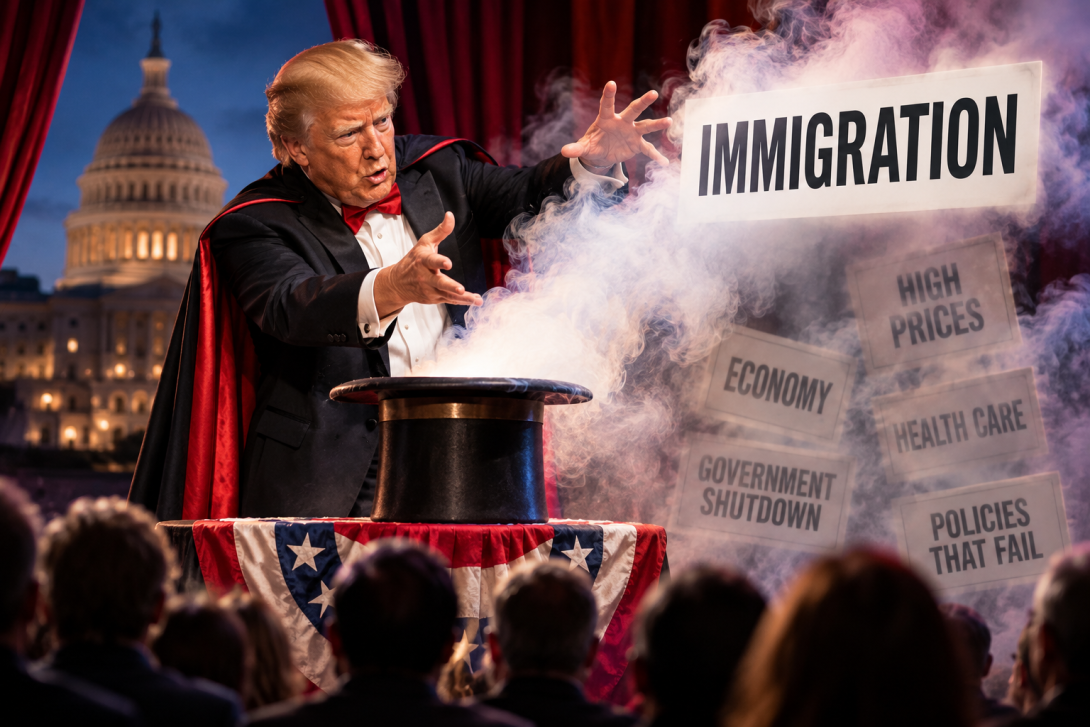
Political Timing: Immigration Enforcement Ahead of the 2026 Midterm Elections
The Administration announced the PERM suspensions on October 8, 2026, less than four weeks before the November 3 congressional midterm elections. The timing deserves scrutiny, particularly as President Trump faces declining public approval and growing dissatisfaction with his economic policies.
An October 8 Pew Research Center report found that Trump's overall approval rating had fallen to 30%, the lowest level of his second term. The survey also found that 44% of registered voters viewed their congressional vote as a vote against Trump, compared with 19% who viewed it as a vote supporting him.
Economic concerns are particularly significant. Pew found that 84% of registered voters considered the economy very important to their congressional vote, while confidence in the President's handling of economic issues had declined.
A separate Financial Times/Focaldata poll conducted October 2–4 found that only 25% of registered voters approved of Trump's management of the economy. Approximately 20% approved of his handling of inflation, while overall presidential approval stood at 34%.
These findings show substantial public dissatisfaction with the Administration's economic performance. They also help explain why immigration remains politically important to Trump and Republican candidates approaching the midterm elections.
Immigration Remains Central to Trump's Political Messaging
Trump and other Republican leaders have repeatedly emphasized immigration restrictions, border security, and protecting American jobs in their political campaigns. Immigration has long served as an issue for mobilizing Republican voters, even when the broader electorate expresses concerns about the Administration's policies.
An Associated Press report published October 6 described how Republican candidates were emphasizing crime, border security, and immigration as they faced voter dissatisfaction over inflation and other issues. The report identified these messages as part of the party's effort to motivate supporters ahead of the elections.
The PERM announcement follows this established political messaging strategy. By targeting Microsoft and other prominent technology companies, the Administration can present immigration restrictions as measures to protect American jobs while directing public attention toward alleged abuses by large corporations.
The choice of targets is particularly noteworthy. Microsoft and Adobe are widely recognized American technology companies, while several of the other designated firms are major international IT outsourcing businesses.
The Administration's announcement connects two politically sensitive issues: employment opportunities for American workers and the use of immigration programs by large corporations. Both themes have featured prominently in Trump's political rhetoric.
Is Immigration Enforcement Being Used to Redirect Public Attention?
The timing raises a legitimate question about whether the PERM suspensions also serve an electoral purpose.
Critics of the Administration argue that immigration enforcement announcements can mobilize Republican voters and redirect public attention from economic difficulties or other unpopular policies. The proximity of the midterm elections, together with declining presidential approval, makes that interpretation relevant to evaluating the announcement.
However, timing alone does not establish political motivation. DOL has authority to investigate suspected immigration violations, and the Administration previously used PERM suspension authority against Cloudera in May 2026, well before the final weeks of the election campaign.
The Administration maintains that its immigration enforcement policies protect American workers from unlawful employment practices and unfair competition. Those are legitimate governmental objectives when supported by evidence and pursued through lawful procedures.
The concern is whether the government has established a sufficient legal and factual basis for suspending all pending PERM applications and prohibiting new filings by the eight companies.
The Administration's public statements emphasize H-1B employment numbers, corporate layoffs, and the protection of American jobs. Yet those facts do not necessarily establish fraud or willful misrepresentation in the PERM program.
Furthermore, the government has not publicly released the suspension notices or detailed findings explaining why each company's participation in PERM must be halted.
This lack of transparency makes it difficult to distinguish legitimate enforcement decisions from actions that may also serve political objectives.
Immigration Enforcement Must Remain Within the Law
Immigration enforcement is an appropriate function of the federal government. Employers that violate recruitment requirements, discriminate unlawfully, or submit fraudulent applications should face appropriate investigations and penalties.
However, enforcement announcements should be judged by more than their political appeal. The government should identify the legal authority, factual basis, and procedural safeguards supporting restrictions that materially affect American businesses and foreign employees.
The potential consequences extend beyond the companies named in the announcement. Foreign professionals who have worked lawfully in the United States for years may lose opportunities for permanent residence or continued employment because of restrictions imposed on their employers.
The central concern is whether DOL is exercising its regulatory authority to investigate documented violations or using broad immigration restrictions to advance a political message without providing sufficient evidence and procedural protections.
The proximity of the midterm elections makes transparency particularly important. Regardless of political considerations, DOL is legally obligated to exercise its enforcement authority within the limits established by Congress and the applicable regulations.
Related SchulzLaw Articles and Blog Posts
For additional information about U.S. employment-based immigration, employer compliance, and alternatives to PERM labor certification, see these related SchulzLaw publications.
Immigration Options for Professionals
Professional Pathways to America: Work Visas and Green Cards — An overview of H-1B and other temporary employment visas, together with EB-1, EB-2, and EB-3 immigrant visa options.
Pathways to America for Extraordinary Talent — Explains O-1 and EB-1A eligibility for individuals with extraordinary ability, including immigration options that do not require PERM labor certification.
Immigration Opportunities for Exceptional Individuals — Discusses employment-based immigration opportunities for individuals with exceptional qualifications, including the EB-2 national interest waiver.
Where Is My Green Card? — Explains immigrant visa availability, priority dates, country-specific backlogs, and the Department of State Visa Bulletin.
H-1B Enforcement and Immigration Policy
Project Firewall: DOL Signals Increased H-1B Enforcement — Examines DOL's employer compliance initiative and increased scrutiny of H-1B employment practices.
Labor Department Major Wage Rule Proposal Would Harm the U.S. — Analyzes proposed changes to prevailing wage requirements affecting H-1B employment and PERM labor certification.
Under Pressure: How the Trump Administration's H-1B Reforms Are Reshaping U.S. Workforce Strategy — Discusses enforcement initiatives, increased immigration costs, and the consequences for American employers recruiting foreign professionals.
USCIS's New Adjustment of Status Memo: Discretion and the Limits of Agency Power — Examines USCIS authority and legal protections affecting foreign nationals seeking adjustment to permanent residence.